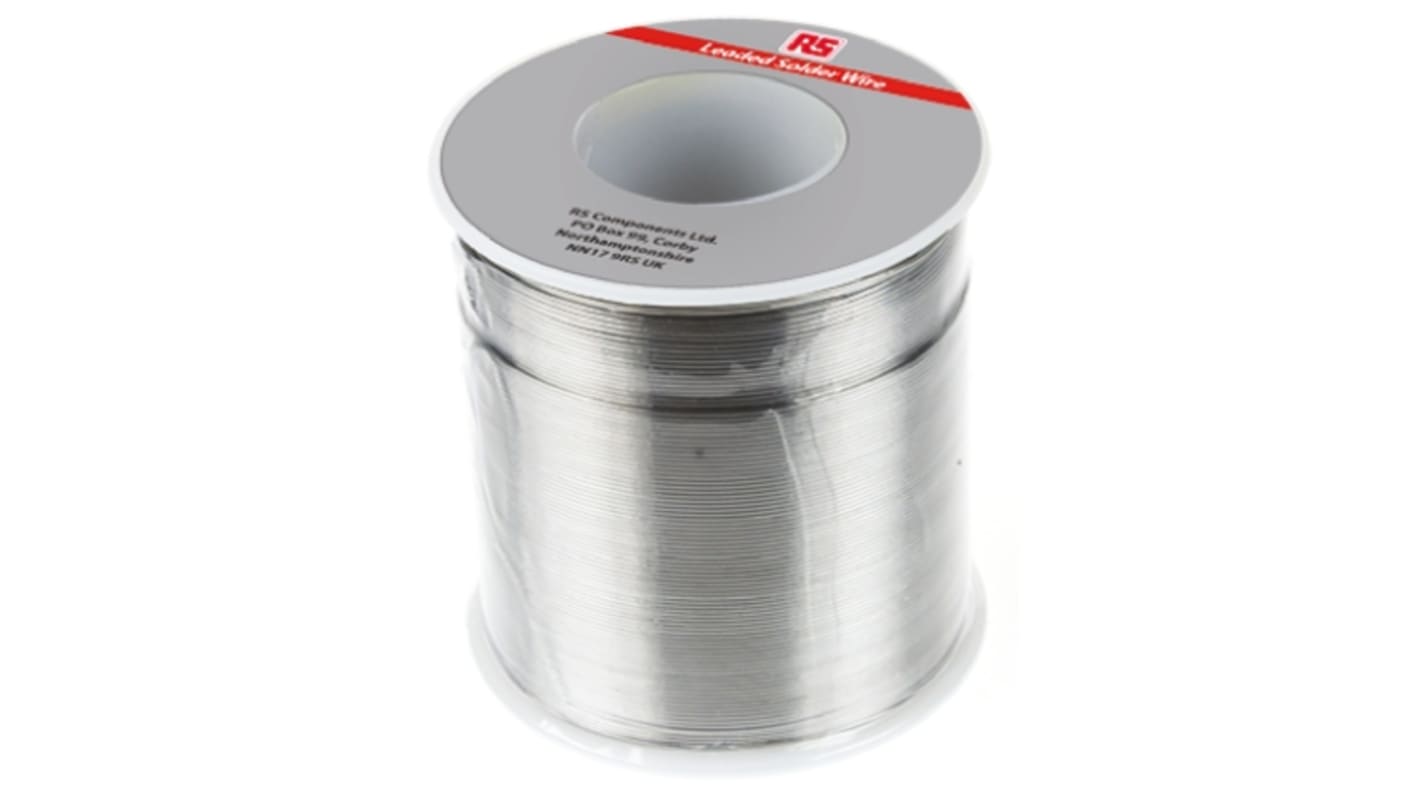
RS PRO Wire, 1.27 mm Lead Solder, 183 °C Melting Point
- RS-stocknr.:
- 800-7652
- Fabrikant:
- RS PRO
Bulkkorting beschikbaar
Subtotaal (1 eenheid)*
€ 33,80
(excl. BTW)
€ 40,90
(incl. BTW)
GRATIS bezorging voor bestellingen vanaf € 90,00
Op voorraad
- 8 stuk(s) klaar voor verzending
- 54 stuk(s) klaar voor verzending vanaf een andere locatie
Heeft u meer nodig? Klik op 'Controleer leverdata' voor extra voorraad en levertijden.
Aantal stuks | Per stuk |
|---|---|
| 1 - 9 | € 33,80 |
| 10 - 19 | € 33,12 |
| 20 - 49 | € 32,53 |
| 50 + | € 31,92 |
*prijsindicatie
- RS-stocknr.:
- 800-7652
- Fabrikant:
- RS PRO
Specificaties
Datasheets
Wetgeving en conformiteit
Productomschrijving
Zoek vergelijkbare producten door een of meer kenmerken te selecteren.
Alles selecteren | Attribuut | Waarde |
|---|---|---|
| Merk | RS PRO | |
| Wire Diameter | 1.27mm | |
| Product Type | Lead Solder | |
| Percent Lead | 40% | |
| Product Form | Wire | |
| Melting Point | 183°C | |
| Percent Tin | 60% | |
| Flux Type | Colophony Free (Rosin) | |
| Product Weight | 250g | |
| Standards/Approvals | No | |
| Alles selecteren | ||
|---|---|---|
Merk RS PRO | ||
Wire Diameter 1.27mm | ||
Product Type Lead Solder | ||
Percent Lead 40% | ||
Product Form Wire | ||
Melting Point 183°C | ||
Percent Tin 60% | ||
Flux Type Colophony Free (Rosin) | ||
Product Weight 250g | ||
Standards/Approvals No | ||
- 60-40 Sn-Pb Colophony Free Solder (EN - SDS)
- RS Pro Datasheet
- Guide
- Contains: Lead - Restricted to Professional Users
- Contains SVHC - Lead - CAS No. 7439-92-1
- Restricted to Professional Users Only
- Manufacturer Information
- 60/40 Sn-Pb Colophony Free Solder (FR - SDS)
- 60/40 Sn-Pb Colophony Free Solder (NL - SDS)
Niet conform
- Land van herkomst:
- US
RS PRO Colophony-Free Tin/Lead Solder Wire
From the trusted RS PRO brand, this solder wire stands apart due to its colophony-free formulation, making it ideal for those who are sensitive to the rosin fumes that are traditionally found in solder flux.
The flux formulation of this solder wire is ideal for wetting common Printed Circuit Boards (PCBs) and components and leaves behind a clear residue that can be removed with dry brushing for a cleaner look or safely left on the PCB after soldering.
Feature and Benefits
• Versatile soldering wire that can be used for a wide range of soldering tasks
• Alloy used consists of 60% tin and 40% lead
• Melting point between 183-188°C
• Low odour formulation with 1.1% flux content
• Soldering iron typical tip temperature for this solder wire is 320-360°C
Applications
Solder is used alongside soldering irons, particularly in securing electrical components to integrated circuit boards. The solder melts easily when heated, and cools quickly, meaning it can be moulded to secure components in place in solder joints. The quick setting nature of solder means it can also be used for light brazing.
Because of its relatively low melting point, solder can be reworked easily by heating it to melting point and using a solder sucker to remove it.
Solder is commonly used with SMD and through-hole components, with applications in repair, prototyping and production.
What are the differences between lead-free solder and leaded solder?
Lead-free solder is generally regarded as having a more positive environmental impact than leaded solder, and also as being safer for human use. However, lead-free solder also has potential production advantages. Lead-free solder can offer better lead spacing, which makes it more suitable for high-density components where pitches are tight. This means potentially better performance where space saving is a concern.
The advantages of lead solder are that it has a lower melting point, which is sometimes preferable for hand working components. Also, lower working temperatures reduces the risk of damage to components and circuit board.
Unlike lead-free solder, lead solder does not have a shelf-life and is less prone to losing quality after prolonged exposure to oxygen. However, many electronic application requirements exclude the use of lead solder, due to the toxicity of lead.
Why RS PRO?
RS PRO aims to be your go-to brand for reliability and value for money. We source great parts at great prices and test everything with our in-house experts to ensure the quality you need.
When it comes to tools, we know that versatility and dependability are what you need. As such, we stock a variety of mainstay and specialist tools to suit any application. Whether you're a professional electrician, technician, engineer or home inventor, RS PRO is here to support you.
Note
The presence of lead in this product makes it imperative that users read the Manufacturer Safety Data Sheet (MSDS) before use and wash their hands after every use.
Warning
Formulation contains lead which makes this solder wire unsuitable for soldering RoHS compliant products.
Standards
Conforms to J-STD 006.
Flux classification per J-STD 004 is ORL0.
Flux classification per J-STD 004 is ORL0.
Gerelateerde Links
- RS PRO Wire, 1.27 mm Lead Solder, 183 °C Melting Point
- RS PRO Wire, 1.27 mm Lead Free Solder, 228 °C Melting Point
- RS PRO Wire, 1.27 mm Lead Free Solder, 217 °C Melting Point
- RS PRO Wire, 0.7 mm
- RS PRO Wire, 0.4 mm
- RS PRO Wire, 1.2 mm
- RS PRO Wire, 0.71 mm
- RS PRO Straight Through Hole PCB Socket, 40-Contact, 2 Row, 1.27 mm Pitch Solder