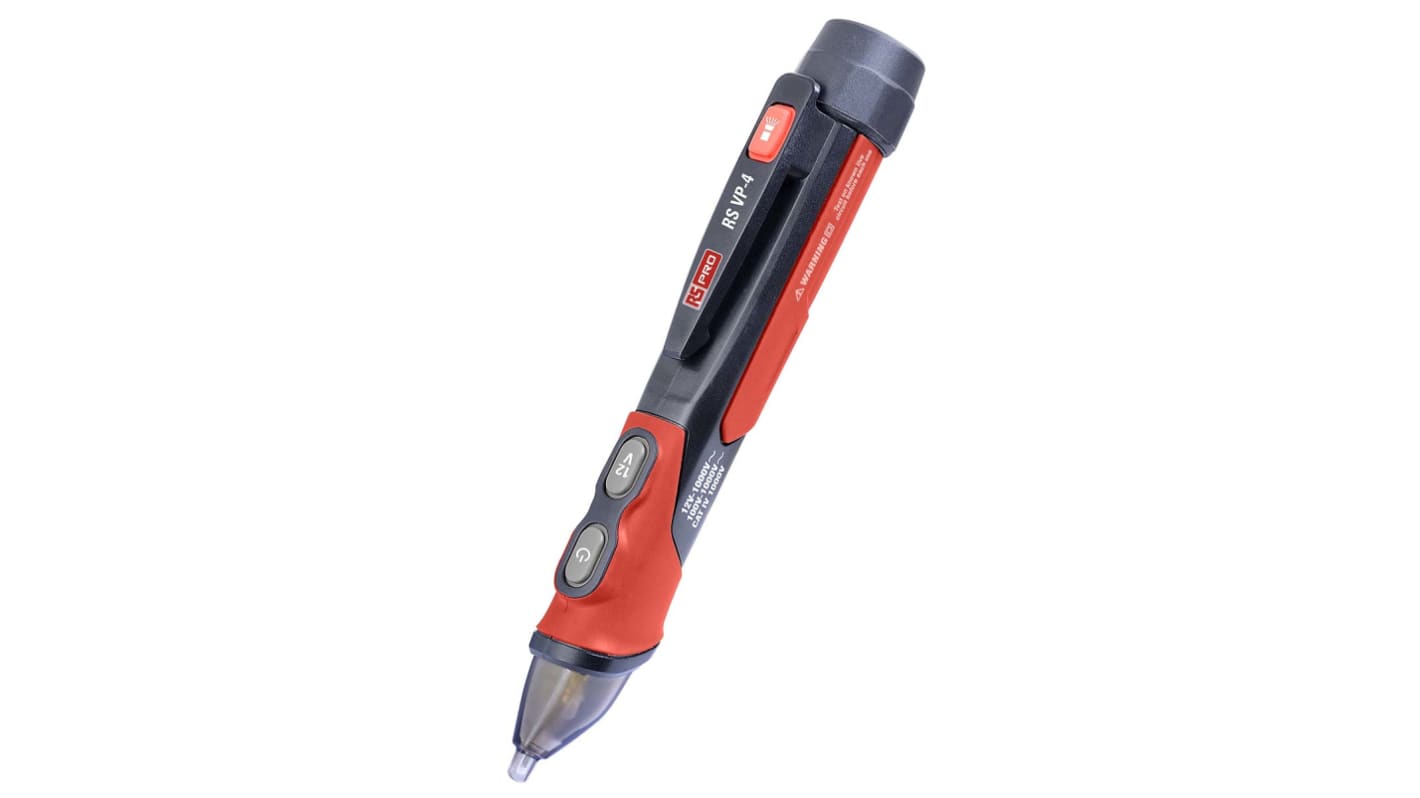
RS PRO RS VP-4 Non Contact Voltage Indicator, 50V ac to 1000V ac
- RS-stocknr.:
- 136-5675
- Fabrikant:
- RS PRO

Subtotaal (1 eenheid)*
€ 34,91
(excl. BTW)
€ 42,24
(incl. BTW)
GRATIS bezorging voor bestellingen vanaf € 75,00
Op voorraad
- Plus verzending 16 stuk(s) vanaf 22 december 2025
- Plus verzending 274 stuk(s) vanaf 22 december 2025
Heeft u meer nodig? Klik op 'Controleer leverdata' voor extra voorraad en levertijden.
Aantal stuks | Per stuk |
|---|---|
| 1 + | € 34,91 |
*prijsindicatie
Kalibratie-opties
- Calibration Type:
- RSCAL
- RS-stocknr.
- 136-5749
la pièce
103,91 €
(excl. BTW)
125,73 €
(incl. BTW)
- RS-stocknr.:
- 136-5675
- Fabrikant:
- RS PRO
Specificaties
Datasheets
Wetgeving en conformiteit
Productomschrijving
Zoek vergelijkbare producten door een of meer kenmerken te selecteren.
Alles selecteren | Attribuut | Waarde |
|---|---|---|
| Merk | RS PRO | |
| Indicator Type | Voltage | |
| Battery Type | AAA | |
| Power Source | Battery | |
| Safety Category | CAT IV 1000 V | |
| Maximum Detection Voltage | 1000V ac | |
| Minimum Detection Voltage | 50V ac | |
| Maximum Operating Temperature | +50°C | |
| Safety Category Voltage | 1000V | |
| Safety Category Level | CAT IV | |
| Minimum Operating Temperature | 0°C | |
| Model Number p | RS VP-4 | |
| Alles selecteren | ||
|---|---|---|
Merk RS PRO | ||
Indicator Type Voltage | ||
Battery Type AAA | ||
Power Source Battery | ||
Safety Category CAT IV 1000 V | ||
Maximum Detection Voltage 1000V ac | ||
Minimum Detection Voltage 50V ac | ||
Maximum Operating Temperature +50°C | ||
Safety Category Voltage 1000V | ||
Safety Category Level CAT IV | ||
Minimum Operating Temperature 0°C | ||
Model Number p RS VP-4 | ||
- Land van herkomst:
- CN
RS PRO VP-4 Non-Contact Voltage Indicator
Safely detect the presence of AC voltage in cables, wires, wall sockets fuses and junction boxes with the RS PRO VP-4. Ergonomically designed for comfort, it features a built in torch for confined spaces, a clip for pockets or tool boxes and a contoured grip. This is an essential tool for every electrician, technician or tradesperson.
Features and Benefits:
• Altitude 2000 meters
• Non-Contact Detection of AC Voltage 200 V ac to 1000 V ac, 12 V to 1000 V ac
• Frequency Range: (50 Hz / 60 Hz)
• Battery: 2 x 1.5 V batteries (AAA)
• Operating Temperature: 32°F to 122°F (0°C to 50°C)
• Rugged, double moulded case
• Safety Compliance: CAT IV-1000 V
• IP67
• Non-Contact Detection of AC Voltage 200 V ac to 1000 V ac, 12 V to 1000 V ac
• Frequency Range: (50 Hz / 60 Hz)
• Battery: 2 x 1.5 V batteries (AAA)
• Operating Temperature: 32°F to 122°F (0°C to 50°C)
• Rugged, double moulded case
• Safety Compliance: CAT IV-1000 V
• IP67
Frequently asked questions:
What is a non-contact voltage tester used for?
Voltage testers or detectors are used to check the flow of current through a circuit. They can be used to check safety, or to ensure equipment is functioning correctly. They can also test for the current strength, whether the circuit is grounded correctly or to ensure no current is flowing at all so that work can be begin on the circuit.
How do non-contact voltage testers work?
Also known as a voltage detector, voltage tester pens, sensors or test pens. They allow the user to test electrical conductors without touching them. Non-contact testers are the safest and easiest way to detect electric fields or voltage. Voltage testers utilise what is called capacitive coupling, the user holding the instrument provides a ground reference. The tester then detects changing electric field around the object or objects conducting an AC current. (Alternating current) Simply put, the user and the tester pen when near the electrical conductor will cause a small current to flow through the tester from the source, this is how it detects AC voltage.
Voltage testers or detectors are used to check the flow of current through a circuit. They can be used to check safety, or to ensure equipment is functioning correctly. They can also test for the current strength, whether the circuit is grounded correctly or to ensure no current is flowing at all so that work can be begin on the circuit.
How do non-contact voltage testers work?
Also known as a voltage detector, voltage tester pens, sensors or test pens. They allow the user to test electrical conductors without touching them. Non-contact testers are the safest and easiest way to detect electric fields or voltage. Voltage testers utilise what is called capacitive coupling, the user holding the instrument provides a ground reference. The tester then detects changing electric field around the object or objects conducting an AC current. (Alternating current) Simply put, the user and the tester pen when near the electrical conductor will cause a small current to flow through the tester from the source, this is how it detects AC voltage.
Gerelateerde Links
- RS PRO RS VP-3 Non Contact Voltage Indicator, 200V ac to 1000V ac
- RS PRO RS VP-3 Non Contact Voltage Indicator, 200V ac to 1000V ac With RS Calibration
- RS PRO RS VP-4 Non Contact Voltage Indicator, 100V ac to 1000V ac With RS Calibration
- RS PRO Non Contact Voltage Indicator 1000V ac
- RS PRO AC-15EXs Non Contact Voltage Detector, 50V ac to 1000V ac
- RS PRO Non Contact Voltage Indicator, 230V ac to 1000V ac
- Martindale NC4 Non Contact Voltage & Magnetic Field Indicator, 12V ac to 1000V ac
- Klein Tools NCVT1P Non Contact Voltage Detector, 50V ac to 1000V ac